

Whatever is presented on the BBC, and I must admit I do not watch the TV, the fact is that…
“The curriculum had already drawn tensions among the county’s religious parents, with some worrying about appropriateness and arguing the material…
As someone who produced dozens of nativity plays as a teacher and a Sunday School leader, that title ‘A Gay…
The defence of a Christian view never seems to be settled by debate: exchange of facts, reference to historical events.…
But …… Rwanda is a safe place: Parliament says so.https://www.legislation.gov.uk/ukpga/2024/8/contentsSafety of Rwanda (Asylum and Immigration) Act 2024 S 2 Safety…


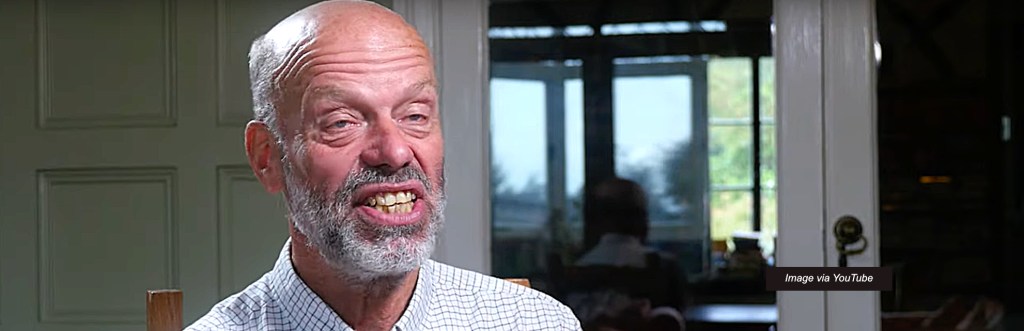
KENT GP Richard Scott, above, who claims to have seen “cancers stop and regress” through the “scientic” application of prayer, overstepped the mark when he began discussing religion to vulnerable patient.
According to this report a fitness to practise tribunal of the Medical Practitioners Tribunal Service (MPTS) found that, although Scott told the 19-year-old patient to “reconnect with God”, he was not guilty of serious misconduct.
Scott, a GP at the Bethesda Medical Centre in Margate, Kent, is no stranger to run-ins with medical watchdogs.
According to this report he has received a number of complaints in the last two decades relating to offering “spiritual” care to some patients.
Last year he reached a settlement with NHS England after agreeing to undertake a one-day training course costing £500 relating to “professional boundaries”.
Scott said at the time:
I do try to follow the General Medical Council guidelines and if you read them correctly, they allow you and encourage you to speak to patients about religion where it’s relevant to their care.
Full well-being is physical, mental and spiritual and it’s more than appropriate, it’s necessary for some patients to look into those existential issues in a way that standard western medicine doesn’t provide.
The Christian Legal Centre claimed he was ‘vindicated’
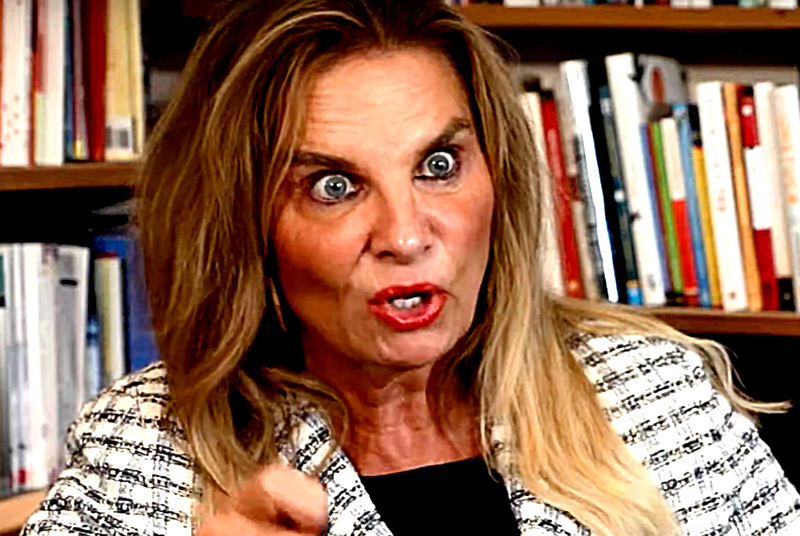
Image via YouTube
With regard to that settlement Andrea Minichiello Williams, above, Chief Executive of the CLC which backed Scott’s case, said she was delighted that Scott has “again been vindicated”.
Dr Scott is a highly experienced doctor whose life and career has been committed to serving his patients and community. He is loved and respected by his community which he has served for decades. His love for Jesus and dedication to his faith is also well known where he works and within the community.
There is no evidence that Dr Scott’s practice of praying with his patients has in any way interfered with his delivery of excellent medicine—in fact, quite the opposite.
The deranged woman added:
At a time when there is widespread recognition that emotional and spiritual support play a significant role in physical healing, it has been particularly distasteful to see NHS England picking on a Christian doctor who is appropriately offering that support.
Williams said NHS England lawyers have now agreed that Dr Scott is free to offer to pray and to pray with patients if he does so within agreed General Medical Council guidance.
In return, Dr Scott agreed, “out of good will, and with no admittance of wrong-doing,” that he would attend a one-day course related to professional boundaries.
The latest hearing was centred on “patient B”, who has a history of Attention Deficit Hyperactivity Disorder. When he consulted Scott on August 25 last year, accompanied by his mother, the young man said he was “taken aback” when the doctor began talking about Christianity, which made him feel “uneasy”.
It was then that the GP told him he needed to “reconnect with God.”
Complaint lodged
Two weeks later the teenager’s mother made a complaint to NHS England about her son’s consultation with Scott.
Scott told the tribunal that he does not pressurise anyone into a spiritual discussion but rather “offers and encourages”.
The tribunal found that though patient B did consent to undertake a spiritual discussion, Dr Scott “then overstepped the boundaries”.
He should have checked the teenager was “comfortable” with engaging in such a discussion and did not feel under pressure to continue it, the tribunal ruled.
General Medical Council (GMC) guidance states doctors may practise medicine in accordance with their beliefs provided they do not cause distress to patients.
And they must not impose or express personal beliefs or values, including political, religious and moral beliefs, to patients in ways that exploit their vulnerability or are likely to cause them distress.
In a 41-page ruling following the tribunal hearings, which began on August 21, the MPTS concluded Scott’s conduct constituted misconduct.
However, in the context of these events, it did not find that Scott’s conduct could be considered deplorable or disgraceful.
The tribunal is currently sitting to consider if Scott should be given a warning letter—which would be his second.
In June 2012 the GMC issued Dr Scott with the warning letter after a patient complained the GP had abused his position by inflicting his religion upon him.
Hat tip: Nigel Jones,
Please help me keep The Angry Atheist going with a donation.
Make a one-time donation
Make a monthly donation
Make a yearly donation
Choose an amount
Or enter a custom amount
Your contribution is appreciated.
Your contribution is appreciated.
Your contribution is appreciated.
Recent posts
American Christian nationalism v theocratic Iran: a recipe for utter disaster
UNTIL September 24 last year the US had a Secretary of Defense in the form of Christian nationalist and “Holy War” advocate Pete Hegseth, above, who, during a decade as a Fox News guest, contributor and host, exhibited “a consistent pattern of advocating belligerence towards Iran.” On September 25 he was named Secretary of War,…

Christian nutjob, ‘who thinks The Wizard of Oz was a documentary,’ axed by South Australian Liberal Party
THE South Australian Liberal Party has confirmed that Carston Woodhouse, above, a candidate in the upcoming state election, will not be running for the party after a series of idiotic remarks he made about homosexuality, feminism and abortion resurfaced. Among the outrageous things Woodhouse said was that he had seen witches “melting.” This prompted Angry…
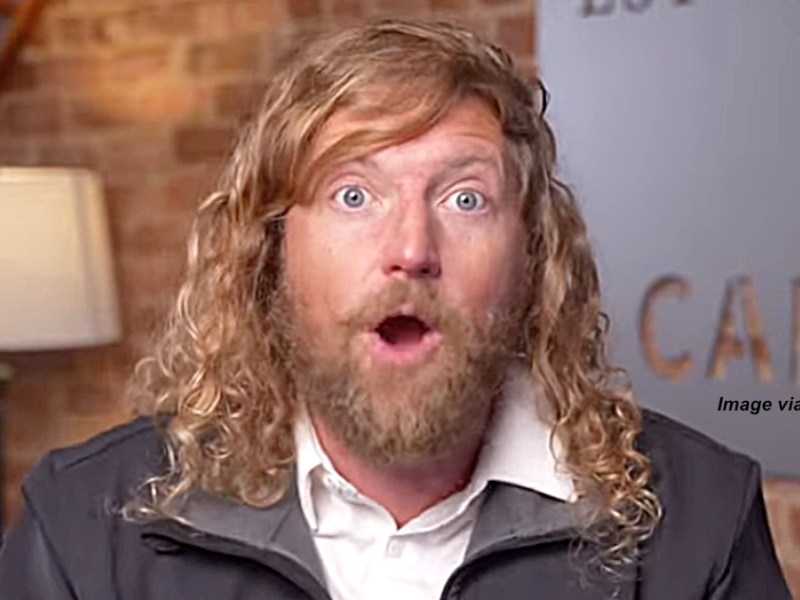
Money-grubbing US preacher Sean (‘Goldilocks’) Feucht sued over misused $250,00 donation
AMONG America’s vast stockpile of lunatic, far-right, Trump-lovin’ and exceedingly avaricious preachers is Sean Feucht, above, who has has frequently been accused of misdeeds ranging from “spiritual abuse” to “financial impropriety.” The shameless huckster stands accused of not including information in his tax reporting around his own salary and the close relationships between his various…


 Barry Duke, the Angry Atheist
Leave a comment