

You get drivel about aliens, abduction etc from all sorts of people, not just Christians – there are atheists, agnostics…

[…] last time I had had occasion to write about Rowan County clerk Kim Davis, above, was three years ago…
Whatever is presented on the BBC, and I must admit I do not watch the TV, the fact is that…
“The curriculum had already drawn tensions among the county’s religious parents, with some worrying about appropriateness and arguing the material…
As someone who produced dozens of nativity plays as a teacher and a Sunday School leader, that title ‘A Gay…


A SWEEPING review of the relationship between faith and the state is due to be published within weeks, and, according to The Guardian those involved say much of the final report will talk about the “positive impact” of religion and worship on UK society.
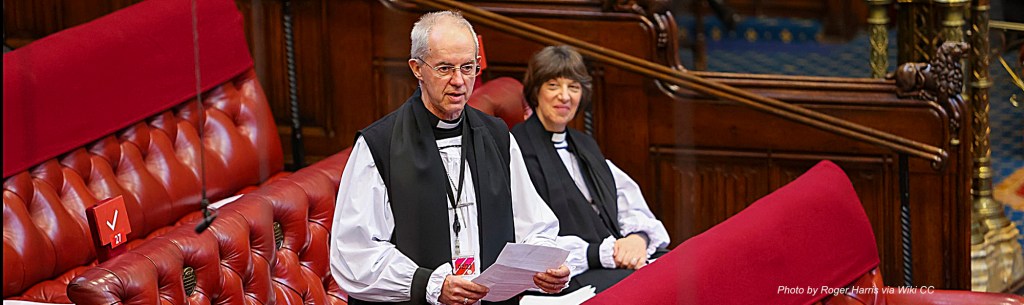
Details of the review coincide with a report by the Commission on Political Power, which says that C of E bishops are an “anomalous” presence in the House of Lords. It recommends their removal in a reformed second chamber, or Senate.
The Commission’s paper opens with the words:
The democratic crisis in the UK has resulted in key institutions losing credibility and respect. The House of Lords is one such institution and reform is urgently needed —the problem is that there is little consensus on its purpose or composition.
Reacting to the Commission’s report, the National Secular Society’s Chief Executive Stephen Evans said:
Ending the arrangement whereby representatives of one religious denomination are given seats as of right would remove an unjustifiable religious privilege from our legislature and make for a more equitable and democratic second chamber.
Whilst it would be reasonable for an appointments commission to take into account the balance of faith representation in a reformed House of Lords or Senate, any attempt to build in religious-based representation, whether ex-officio or appointed, would be a divisive and retrograde step.
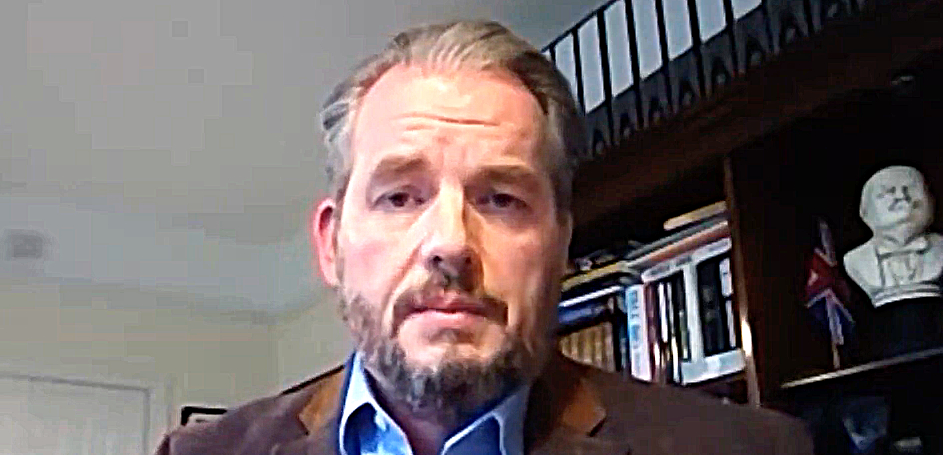
Image via YouTube
The government review, The Guardian reports, is headed by Colin Bloom, above, a former head of the Conservative Christian Fellowship who helped put religion back at the heart of the Tory’ policy after the Thatcher years. It’s mission: To be ‘salt and light’ in British Politics.
Bloom has spent the last few years speaking to religious and secular groups, and those involved in some of those discussions say they expect the final report to be broader than any previous such review.
Positive aspects of the review
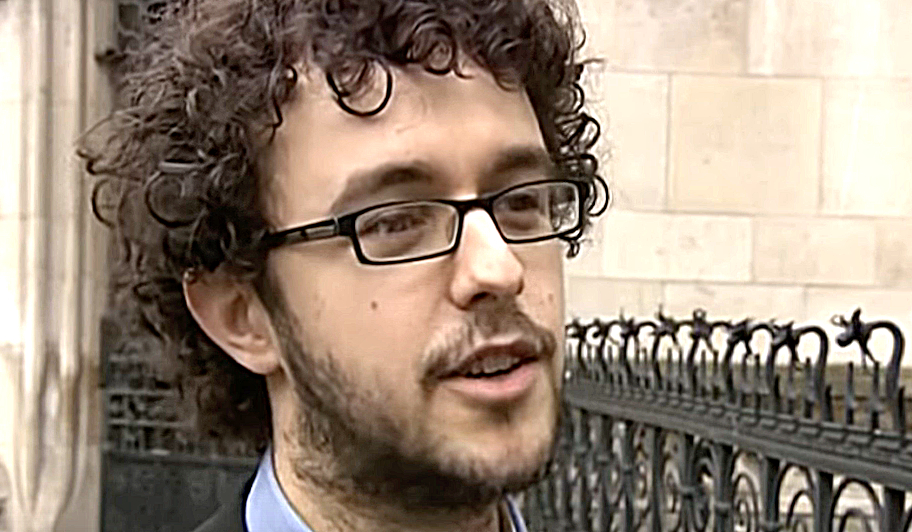
Image via YouTube
Richy Thompson, above, Director of public affairs at Humanists UK, told The Guardian:
In the past the government has sometimes been nervous about tackling problems caused by religious groups, but those problems can extend to the most extreme forms of abuse. If this report is to see the government change tack here, then that is to be welcomed.
He was referring to the fact that the review contains a section that religious groups won’t find palatable, namely “the harms that religious groups can cause.”
In one part of the report, Bloom will urge ministers to tackle the problems caused by unregistered faith schools, where concerns have been raised about abuse and radicalisation.
Conservative ministers have attempted to regulate such schools before but have been forced to back down amid outcries from mainstream religious groups.
Bloom will also push the government to do more to tackle forced marriages, and will ask for greater resources to help support those trying to leave controlling religious groups.
Yehudis Fletcher, the co-founder of Nahamu, a thinktank countering extremism within the Jewish community, was one of those consulted during the review process. She said:
There is no excuse for these harms to be ignored, for these people to be left to suffer without intervention by the state.
But a Muslim Council of Britain spokesperson complained:
There remains a lack of any meaningful engagement by government with diverse British Muslim communities … We would hope that the Bloom report recognises how vital it is for the government to establish meaningful engagement with British Muslim communities more broadly and the key role Muslim-led representative bodies can play in facilitating this.
Note: The photo by Roger Harris used to illustrate this piece shows Justin Welby, the Archbishop of Canterbury, and Rachel Treweek, the Bishop of Gloucester, in the House of Lords in 2021.
You can also support my work via a one-off donation via PayPal, Buy Me a Coffee or GofundMe.
If you spot any typos in this report please notify me at freethinkered@aol.com
Latest posts
Mel Gibson’s ‘The Passion of the Christ’ was described as ‘Christian torture porn’. Now he’s making two sequels.
Become a paid subscriber to support my site and keep it free for everyone. Thank you. URBAN Dictionary defines “torture porn” as horror movies that feature gratuitously violent images with no credible story lines. After The Passion of the Christ was released — some joked that it actually escaped — the term “Christian torture porn”…


Democratic senator falsely repeats claims that America’s Founding Fathers had a theocratic agenda
Become a paid subscriber to support my site and keep it free for everyone. Thank you. WHEN white Christian nationalists — ranging from US Vice President JD Vance to English criminal Tommy Robinson — make wild claims that America and Britain are Christian countries that require theocratic governance we say “meh”, shrug our shoulders and…
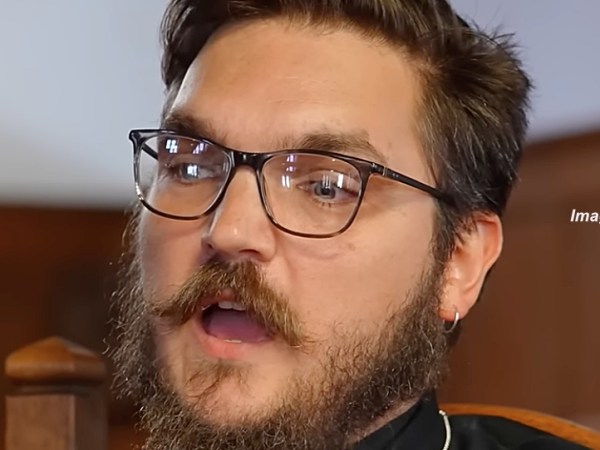
‘Judaism is a false antichrist religion’ and Islam is ‘demonic’ says Christian charity trustee reverend Brett Murphy
MURPHY’S despicable views have sparked a complaint to the Charity Commission by the UK’s National Secular Society (NSS) which alleges that a trustee of the Emmanuel Free Church of England Morcambe was promoting “vicious homophobia and sowing social division” in his sermons. The church, registered charity, says on its website that: So many churches today…


Leave a comment