

“The curriculum had already drawn tensions among the county’s religious parents, with some worrying about appropriateness and arguing the material…
As someone who produced dozens of nativity plays as a teacher and a Sunday School leader, that title ‘A Gay…
The defence of a Christian view never seems to be settled by debate: exchange of facts, reference to historical events.…
But …… Rwanda is a safe place: Parliament says so.https://www.legislation.gov.uk/ukpga/2024/8/contentsSafety of Rwanda (Asylum and Immigration) Act 2024 S 2 Safety…
Religion can survive only on the most unquestionable assumptions. The statements made on Sundays on the BBC as if they…


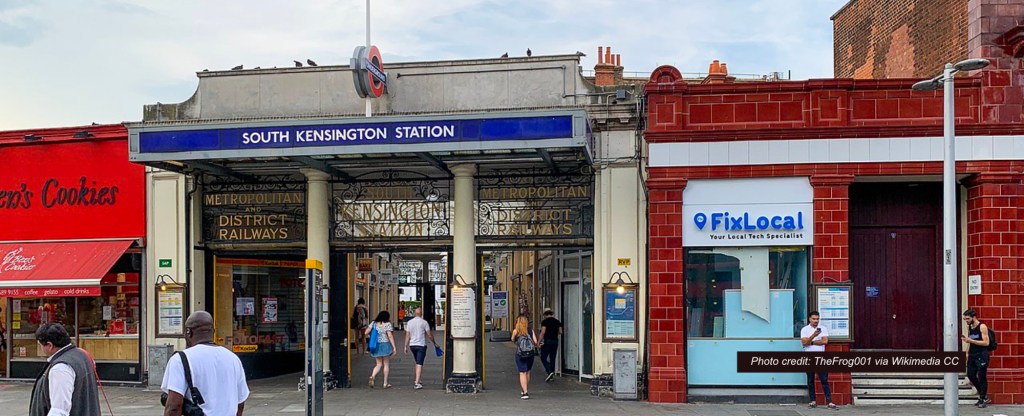
THE problem: the Exhibition Road entrance to South Kensington tube station forms part of Science Museum, which houses human remains.
This apparently makes it inaccessible to those Jews who believe that they may not come into contact with dead bodies in any shape or form (exceptions are made for immediate family).
The proposed solution, according to the Evening Standard: a £2-million makeover that would add a small roof at the entrance to station to separate it from the museum.
The plan would accommodate the religious beliefs of members of the 1,500 Kohanim families in London, who are currently “prohibited” from using “the whole underground line that runs past or connects to that entrance.”
The plan was put to the Chelsea and Kensington council’s planning committee by an agent on behalf of the Stamford Hill-based Union of Orthodox Hebrew Congregations.
The agent explained that the Kohanim—descendants of the sons of Aaron who served as priests in the temple in Jerusalem—have “special rules and guidelines on how to behave”.
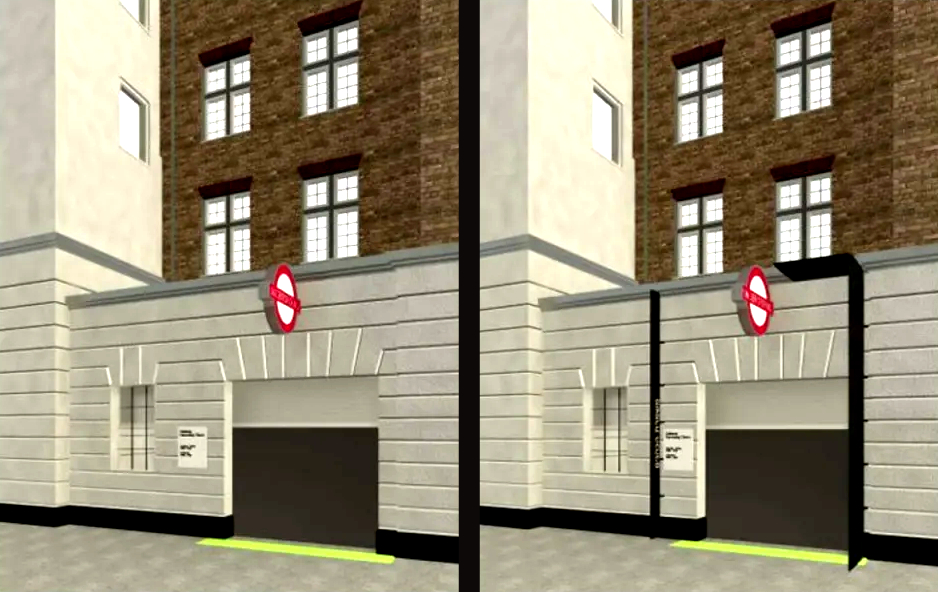
Existing (left) and proposed perspective view. Photo via planningsearch.rbkc.gov.uk
Members of Kensington and Chelsea’s planning committee will are expected to consider when it is lodged next month.
It was originally intended to be discussed this week but was pulled at the last minute.
Council officials recommended the plan be approved when it was first lodged.
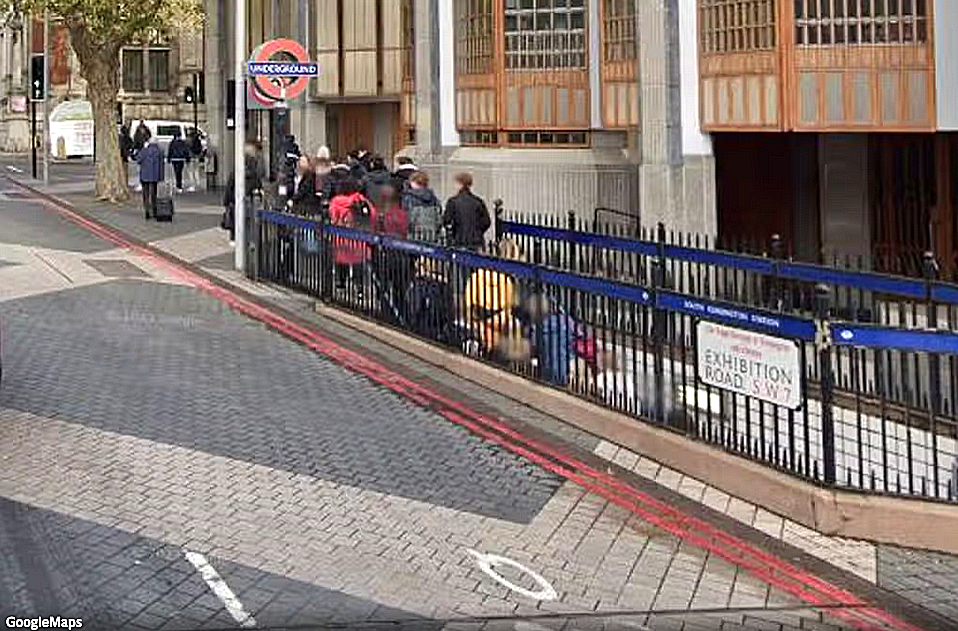
But the changes to the entrance, between the museum and Imperial College London, were objected to by the college and the wider Exhibition Road Cultural Group whose members include nearby museums such as the V&A, the Natural History Museum and the Science Museum.
The group said the entrance was “used by millions of people visiting the museums, Royal Albert Hall, educational institutions, and by people living and working in the area” and said more information was needed about the plan.
They said:
The drawings on the application do not give details to understand the impact of the proposed installation on the visibility of the station entrance, the flow of pedestrians and the overall design of this heavily used area.
It is not clear from the drawings whether the proposal is to include a religious message on the installation. Exhibition Road is a high-profile and complex public space, with multiple users and a holistic approach is necessary to consider permanent changes there.
New York’s problems with accommodating religious beliefs
As far back as 2013 The New York Times reported that ultra-Orthodox Jews were using their increased muscle to get the authorities to bend the rules to meet their religious requirements.
One example was the insistence by Hasidic matzo bakeries that they be allowed to use water from groundwater wells rather than from reservoirs to prepare dough.
After inspectors told a Satmar bakery that it could not use well water without a permit since reservoir water was “available,” the Hasidim marshaled their lawyers.
The lawyers, “with Talmudic hairsplitting”, argued that the reservoir water was not technically “available” to the Hasidim because it had been treated with chemicals like chlorine and so violated religious requirements for matzo baking.
The Times reported that “the conflicts and predicaments” between Orthodox Jews and the authorities seem to be multiplying.
The city’s Commission on Human Rights issued complaints in 2012 against a half-dozen Hasidic merchants on Williamsburg’s Lee Avenue for posting signs stating, “No shorts, no barefoot, no sleeveless, no low-cut neckline allowed in this store.”
The signs, the city said, discriminated against women and non-Orthodox men in places patronised by the public. Hasidic advocates said the signs were no different than dress codes at places like the Four Seasons Restaurant.
And then there was the issue of library opening times. Hasidim have also been pressing public libraries in their neighborhoods to open on Sunday, just as the post office and banks now do, since they cannot patronise them on the Sabbath. But Brooklyn library officials refused, pointing out that union contracts require expensive Sunday overtime.
Hat tip: Malcolm Dodd
Please help keep The Angry Atheist going with a donation.
Make a one-time donation
Make a monthly donation
Make a yearly donation
Choose an amount
Or enter a custom amount
Your contribution is appreciated.
Your contribution is appreciated.
Your contribution is appreciated.
DonateDonate monthlyDonate yearlyYou can also support my work via PayPal, Buy Me a Coffee or GofundMe.
Recent posts

American Christian nationalism v theocratic Iran: a recipe for utter disaster
UNTIL September 24 last year the US had a Secretary of Defense in the form of Christian nationalist and “Holy War” advocate Pete Hegseth, above, who, during a decade as a Fox News guest, contributor and host, exhibited “a consistent pattern of advocating belligerence towards Iran.” On September 25 he was named Secretary of War,…

Christian nutjob, ‘who thinks The Wizard of Oz was a documentary,’ axed by South Australian Liberal Party
THE South Australian Liberal Party has confirmed that Carston Woodhouse, above, a candidate in the upcoming state election, will not be running for the party after a series of idiotic remarks he made about homosexuality, feminism and abortion resurfaced. Among the outrageous things Woodhouse said was that he had seen witches “melting.” This prompted Angry…
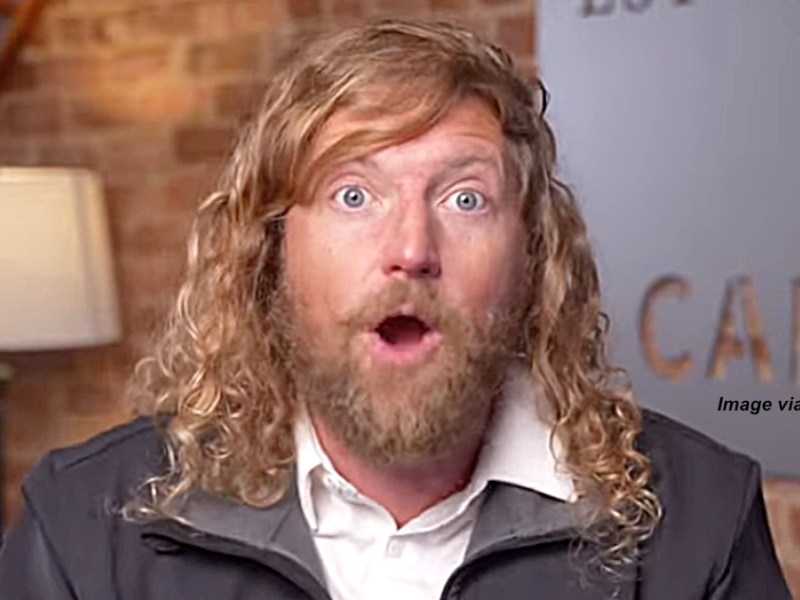
Money-grubbing US preacher Sean (‘Goldilocks’) Feucht sued over misused $250,00 donation
AMONG America’s vast stockpile of lunatic, far-right, Trump-lovin’ and exceedingly avaricious preachers is Sean Feucht, above, who has has frequently been accused of misdeeds ranging from “spiritual abuse” to “financial impropriety.” The shameless huckster stands accused of not including information in his tax reporting around his own salary and the close relationships between his various…


 Barry Duke, the Angry Atheist
Leave a comment